Look up · dinosaur 1273 of 1,425
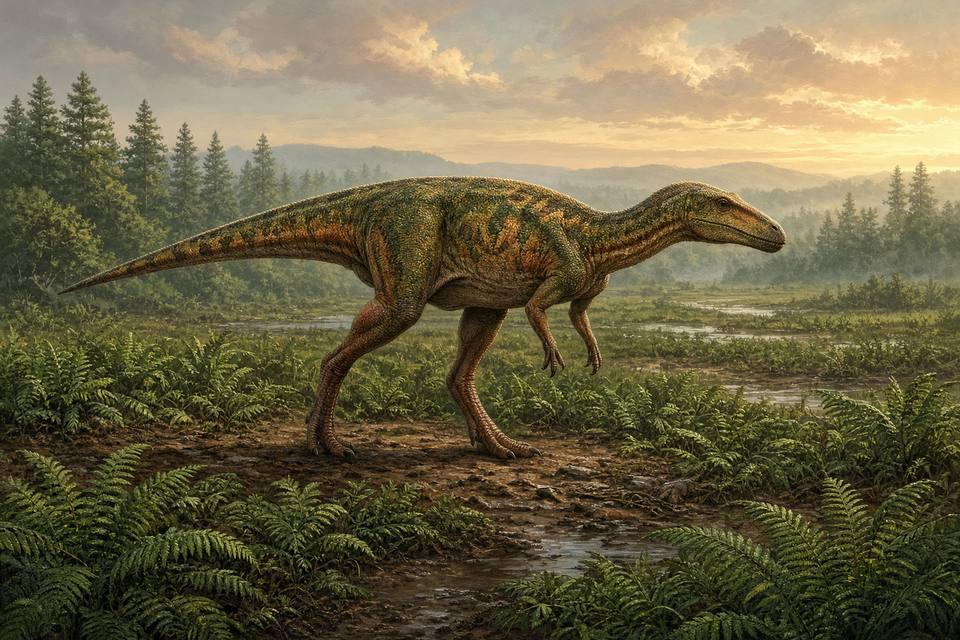
beaked plant-eater
Transylvanosaurus
Say it like this: “TRAN-sil-VAY-no-SOR-us”
Transylvanosaurus platycephalus
Transylvanosaurus ate plants and walked on two legs. It lived in the Late Cretaceous. Bones have been found in Romania.
- When
- Late Cretaceous (Maastrichtian) · roughly 72.2 to 66 million years ago
- Named in
- 2022 · Augustin, F. J.; Bastiaans, D.; Dumbravă, M. D.; Csiki-Sava, Z.
- Hip height
- Not established
- Length
- Not established
- Weight
- Not established
- Found in
- Romania
- Food and walking
- Herbivore · Two legs
- Kind
- beaked plant-eater · Ornithopod
- Family branch
- Rhabdodontomorpha
The story in short
In 2022, F. J. Augustin and colleagues published the name Transylvanosaurus. The name means “lizard from across the forest.”
Fossils referred to Transylvanosaurus date to the Late Cretaceous (Maastrichtian), roughly 72.2 to 66 million years ago. Finds come from Romania. It was a herbivore and walked on two legs.
The fossils of Transylvanosaurus are too incomplete for a responsible length, hip height, or weight, so those fields are left blank on purpose.
On the family tree it sits in Rhabdodontomorpha, among the ornithopod dinosaurs.
Close relatives
Ampelognathus
Ampelognathus coheni
Late Cretaceous (Cenomanian) · roughly 100.5 to 93.9 million years ago
Convolosaurus
Convolosaurus marri
Early Cretaceous (Aptian) · roughly 121.4 to 113.2 million years ago
Foskeia
Foskeia pelendonum
Early Cretaceous (Barremian · Aptian) · roughly 125.8 to 113.2 million years ago