Look up · dinosaur 465 of 1,425
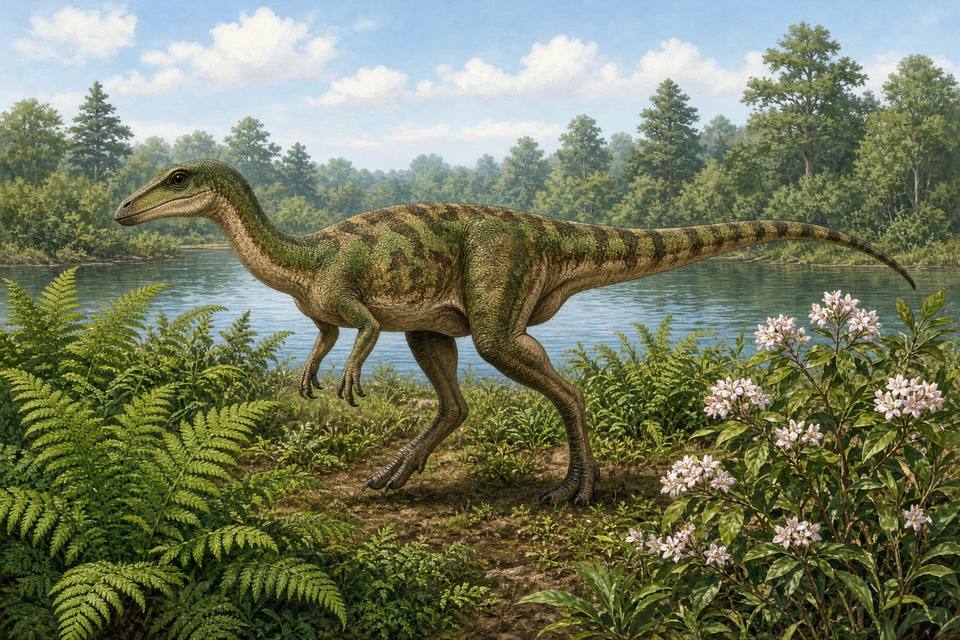
beaked plant-eater
Foskeia
Say it like this: “foh-SKAY-ah”
Foskeia pelendonum
Foskeia ate plants and walked on two legs. It lived in the Early Cretaceous. Bones have been found in Spain.
- When
- Early Cretaceous (Barremian · Aptian) · roughly 125.8 to 113.2 million years ago
- Named in
- 2026 · Dieudonné, P.; Becerra, M. G.; Zanesco, T.; Tortosa, T.; Cruzado‐Caballero, P.; Stein, K.; Torcida Fernández‐Baldor, F.
- Hip height
- Not established
- Length
- 0.5 m · 2 ft
- Weight
- Not established
- Found in
- Spain · Castrillo de la Reina
- Food and walking
- Herbivore · Two legs
- Kind
- beaked plant-eater · Ornithopod
- Family branch
- Rhabdodontomorpha
The story in short
In 2026, P. Dieudonné and colleagues published the name Foskeia. The name means “to forage.”
Fossils referred to Foskeia date to the Early Cretaceous (Barremian · Aptian), roughly 125.8 to 113.2 million years ago. Finds come from Spain, including the Castrillo de la Reina Formation. It was a herbivore and walked on two legs.
Published estimates put Foskeia at a length near 0.5 m.
On the family tree it sits in Rhabdodontomorpha, among the ornithopod dinosaurs.