Look up · dinosaur 13 of 1,425
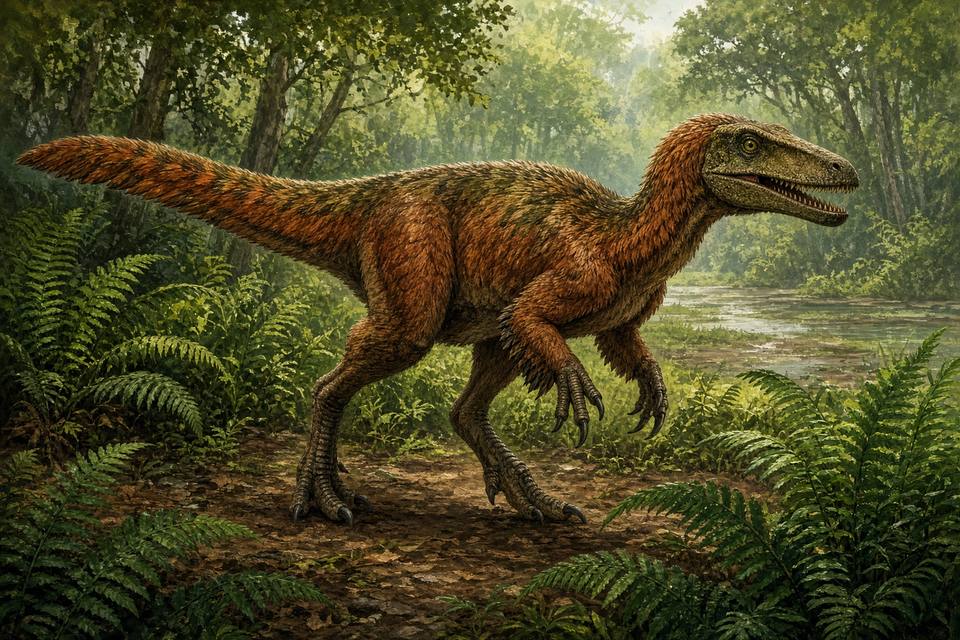
sharp-clawed runner
Achillobator
Say it like this: “uh-KIL-uh-BAY-tor”
Achillobator giganticus
Achillobator ate meat and walked on two legs. It lived in the Late Cretaceous. Bones have been found in Mongolia.
- When
- Late Cretaceous (Cenomanian–Santonian) · roughly 100.5 to 83.6 million years ago
- Named in
- 1999 · Perle, A.; Norell, M. A.; Clark, J. M.
- Hip height
- 1.3 m · 4 ft
- Length
- 4.5–5 m · 15–16 ft
- Weight
- 250–350 kg · 551–772 lb
- Found in
- Mongolia · Bayanshiree
- Food and walking
- Carnivore · Two legs
- Kind
- sharp-clawed runner · Theropod
- Family branch
- Dromaeosaurinae
The story in short
Achillobator was formally named in 1999 by A. Perle and colleagues. The name means “achilles hero.”
Fossils referred to Achillobator date to the Late Cretaceous (Cenomanian–Santonian), roughly 100.5 to 83.6 million years ago. Finds come from Mongolia, including the Bayanshiree Formation. It was a carnivore and walked on two legs.
Published estimates put Achillobator at a length near 4.5–5 m, hips about 1.3 m high, and a body mass around 250–350 kg.
On the family tree it sits in Dromaeosaurinae, among the theropod dinosaurs.
Close relatives
Dromaeosaurus
Dromaeosaurus albertensis
Late Cretaceous (Campanian) · roughly 83.6 to 72.2 million years ago
Itemirus
Itemirus medullaris
Late Cretaceous (Turonian) · roughly 93.9 to 89.8 million years ago
Utahraptor
Utahraptor ostrommaysi
Early Cretaceous (Valanginian) · roughly 137.1 to 132.6 million years ago